
Choosing a tool to analyze your stocks means choosing a philosophy of analysis. Screeners filter, rating platforms judge on one axis, recommendation apps oversimplify, and financial-AI tools synthesize. Each has a blind spot. This article compares these families of tools and explains why a multi-signal approach like InvestIQ's fills their main weaknesses.
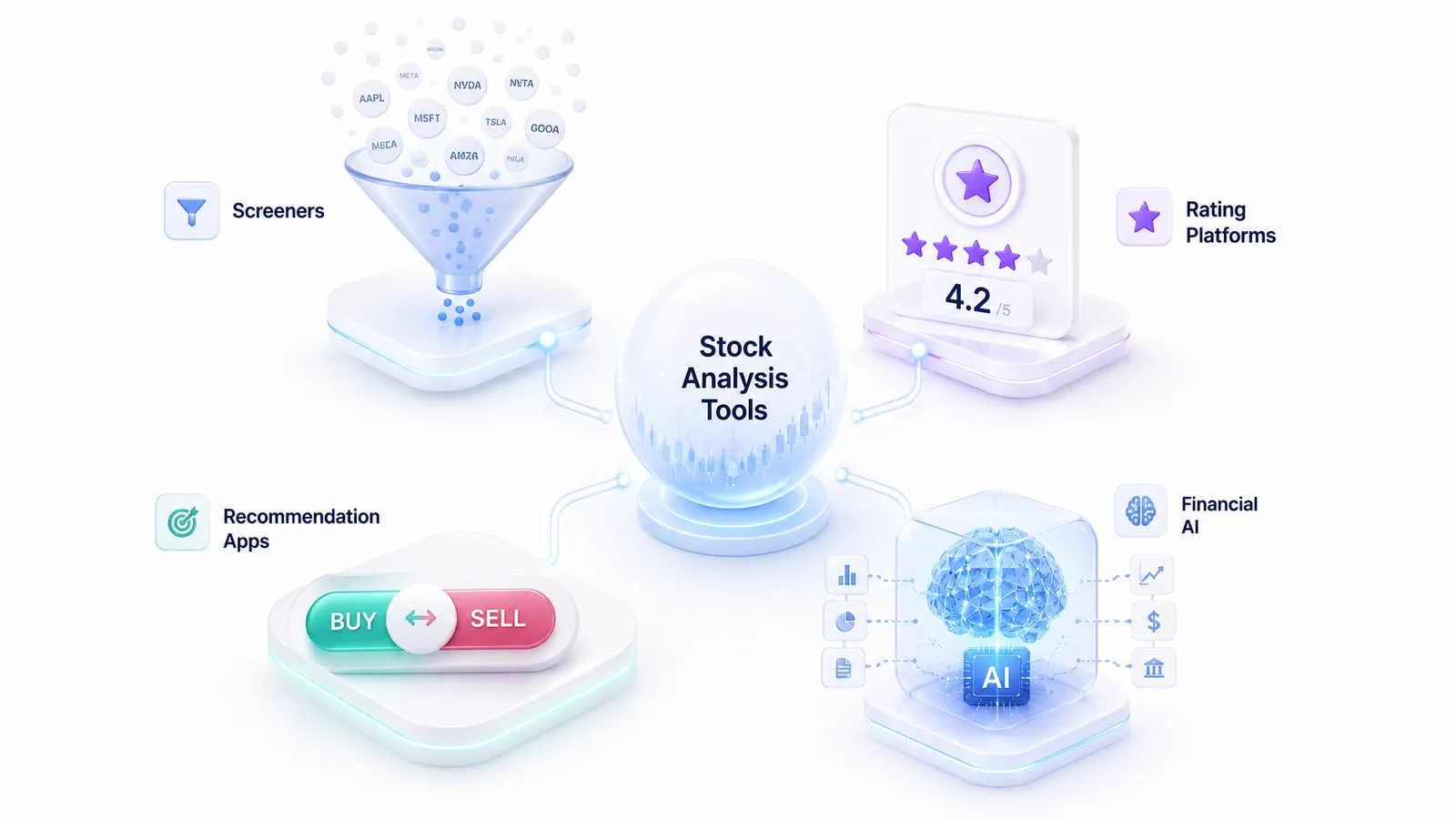
What are the main families of analysis tools?
The market's offering can be grouped into four families, each meeting a different need and leaving a characteristic blind spot.
| Family | Main strength | Blind spot |
|---|---|---|
| Free screeners | Filter a large universe fast | No synthesis, no decision |
| Rating platforms | A single synthetic score | Often single-axis (quality OR value) |
| Recommendation apps | Simplicity, direct signal | Black box, opaque method |
| Multi-signal financial AI | Reasoned synthesis | Depends on the quality of the source data |
How good are free screeners?
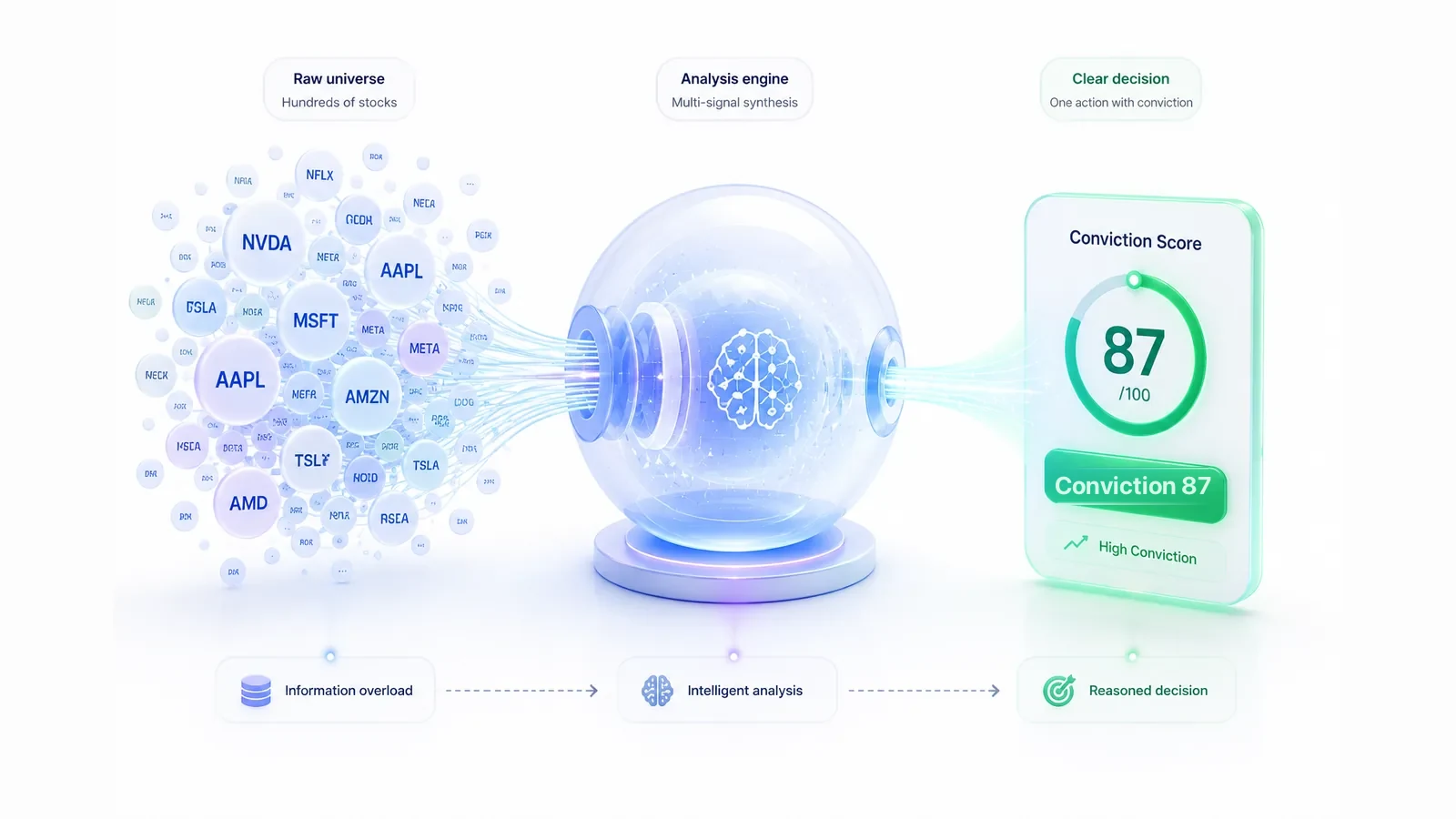
Free screeners are excellent starting points: they filter thousands of stocks by criteria (P/E, market cap, dividend). Their limit is structural: they produce a list, never a decision. The user is left alone facing 200 results with no conviction ranking, no weighting between criteria, and no interpretation. The work of analysis begins where the screener stops.
Are rating platforms enough?
Platforms that assign a score to a stock are useful but often one-dimensional. Some rate financial quality above all, others valuation, others momentum. The problem is that these axes regularly contradict each other: a high-quality company can be expensive, a discounted stock can be in decline. A single score that aggregates these tensions poorly gives a false impression of simplicity. No single indicator is enough: each has blind spots, and what it says about a stock varies across periods and sectors.
Why be wary of direct recommendation apps?
Apps that display a simple "Buy" or "Sell" appeal through their simplicity, but pose two problems. First, transparency: with no explicit method, the user cannot judge the signal's reliability or understand what would invalidate it. Second, the regulatory framework: a personalized buy or sell recommendation falls under investment advice, strictly regulated in Europe by the MiFID II directive. A serious tool informs and explains; it does not dictate.
What does a multi-signal approach like InvestIQ bring?
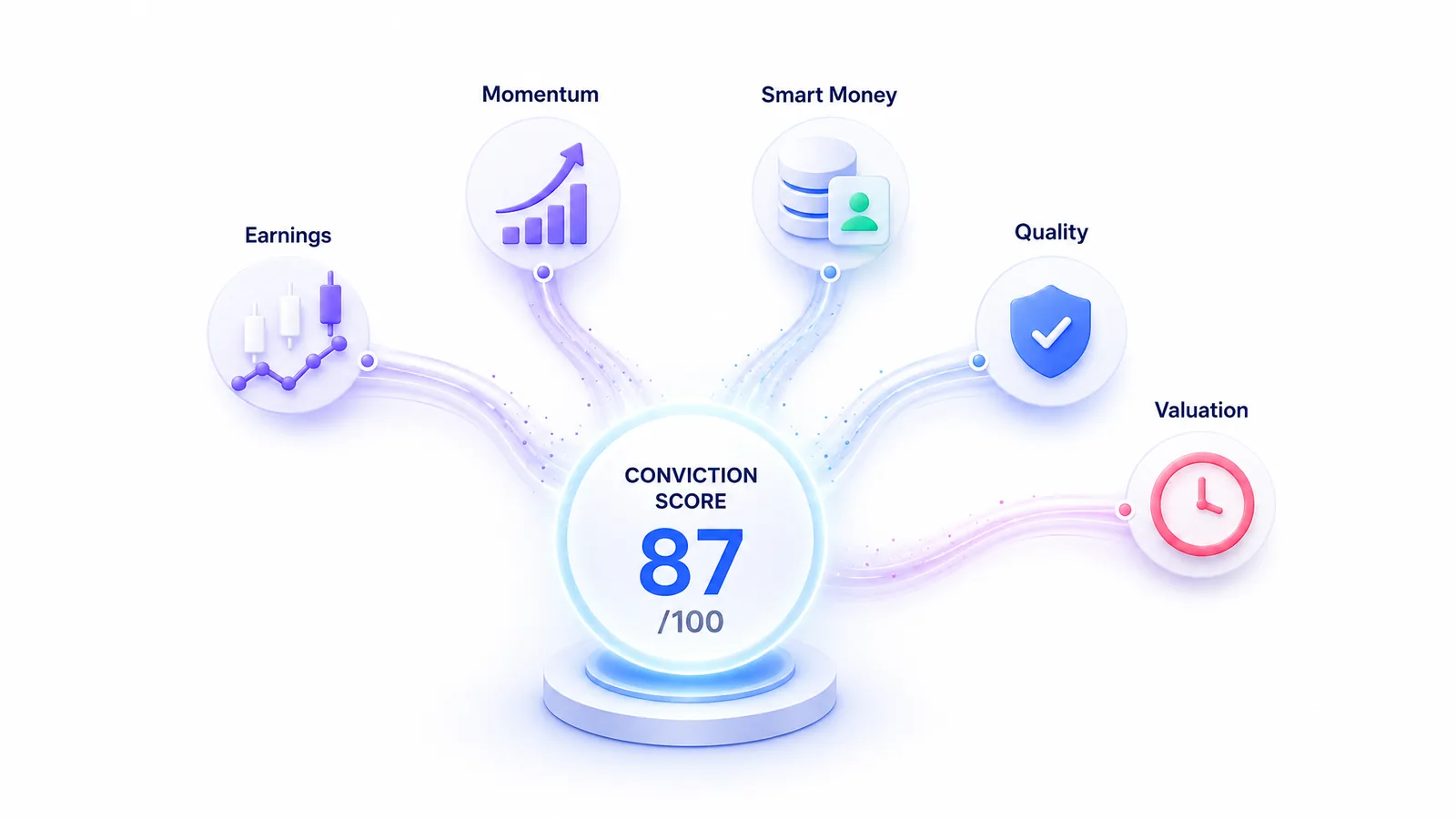
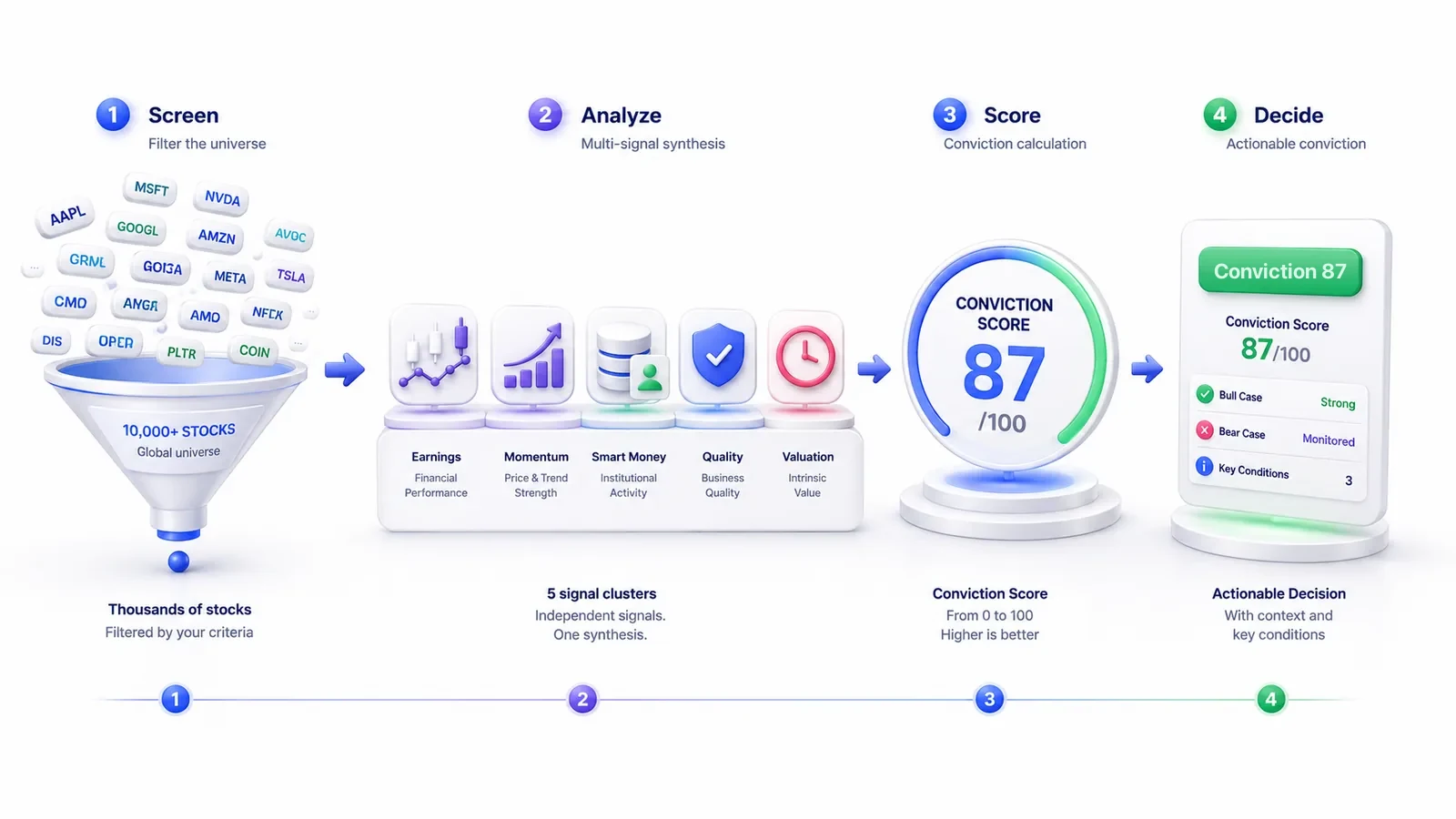
InvestIQ starts from a simple observation: no signal is enough on its own, and independent families of data pointing the same way confirm each other better than several indicators measuring the same thing. The tool therefore computes a conviction score from 0 to 100 from five orthogonal signal families — earnings, momentum, smart money, financial quality, valuation — together with the conditions that would call it into question.
How does this method correct the other tools' blind spots?
Where the screener stops at the list, InvestIQ ranks by conviction. Where the single-axis platform contradicts itself, it aggregates five independent axes and explicitly flags the tensions between them. Where the recommendation app stays opaque, it details each cluster, lays out a quantified bull case and bear case, and stays within the informational framework required by regulation.
| Criterion | Screener | Single-axis rating | Reco app | InvestIQ |
|---|---|---|---|---|
| Ranks by conviction | No | Partial | Yes | Yes |
| Combines several axes | No | No | Variable | Yes (5) |
| Transparent method | Yes | Variable | No | Yes |
| Complies with informational framework | Yes | Yes | At risk | Yes |
| Reasoned synthesis | No | No | No | Yes |
How to choose based on your profile?
To explore a large universe, a screener is unbeatable. For a quick view on a single axis, a rating platform may suffice. But to turn an analysis into a reasoned decision, across several dimensions, while keeping control of the interpretation, a multi-signal approach is the most complete. The ideal is often to combine: a screener to generate ideas, then multi-signal analysis to decide.
What matters is not the tool but the method: an isolated signal misleads, the convergence of independent signals protects.
This is not investment advice. The comparisons concern categories of tools and not named products.
Tools and data for this topic
Frequently asked questions
There is no single ideal tool. Screeners excel at filtering, rating platforms at a single-axis view, and multi-signal tools like InvestIQ at turning analysis into a reasoned decision across several dimensions.
Because a single score hides the tensions between the data: a high-quality company can be expensive, a discounted stock can be in decline. Looking separately at several independent axes (earnings, momentum, quality, valuation) shows where they converge and where they contradict each other.
It is risky on two counts: the method is often opaque, and a personalized recommendation falls under regulated investment advice (MiFID II in Europe). A serious tool informs and explains without dictating.
